


 Skype: chinamaker99
  Tel: 86-316-5120812
  Email:
  Whatsapp:
In high-temperature and high-pressure pipeline systems, on deep-sea drilling equipment, and in chemical plants carrying hazardous media, there is a special type of connector silently enduring extreme challenges – alloy steel flanges. This type of flange is not simply forged from ordinary steel, but achieves mechanical properties and environmental resistance beyond conventional standards by precisely adding alloy elements, becoming the most robust and reliable connection node in modern industrial pipeline systems.
In the connection and sealing system of industrial pipeline systems, Alloy Steel Flange is a core component that combines multiple functions of connection, sealing, and support. It achieves detachable docking between pipelines and equipment through bolted connections, and is suitable for complex industrial conditions such as high temperature, high pressure, and strong corrosion due to the excellent mechanical properties and corrosion resistance of alloy steel. From petrochemicals, power energy to metallurgical manufacturing, Alloy Steel Flange has always been a key support for ensuring the stable operation of pipeline systems, and its quality and performance directly affect the safety and efficiency of industrial production.
The core value of alloy steel flanges lies in their unique material properties. By adding alloying elements such as chromium, molybdenum, nickel, and vanadium to carbon steel, the internal structure of the steel has undergone fundamental changes. Chromium enhances corrosion resistance and high-temperature strength, molybdenum increases creep resistance and hardness, nickel improves low-temperature toughness, and vanadium refines grain size to improve overall performance. This scientific element ratio is not simply a superposition, but based on a profound understanding of the metal crystal structure and phase transition laws, enabling materials to exhibit directional strengthening characteristics in specific environments. For example, on the main steam pipeline of a high-temperature and high-pressure power plant, the flange material must be able to maintain strength for a long time at several hundred degrees high temperature; In liquefied natural gas projects, flanges need to maintain sufficient toughness in low temperature environments ranging from minus zero to hundreds of degrees Celsius.
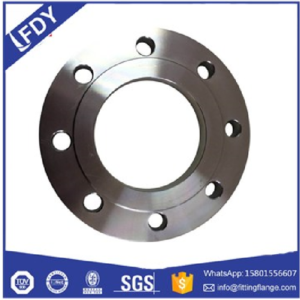
The precise control of processing technology is a key link in ensuring the performance of Alloy Steel Flange. From raw material processing to finished product inspection, multiple strict processes are required. The selection of raw materials requires component testing and mechanical property testing to ensure that the alloy steel meets the standard requirements; The forming process mainly includes forging, casting, rolling, etc. Among them, forged flanges are widely used in high-pressure and high-temperature working conditions due to their dense metal structure and excellent mechanical properties, while cast flanges are suitable for ordinary scenarios with lower pressure; Subsequent processing requires precision mechanical machining such as turning and drilling to ensure that the sealing surface accuracy, aperture size, and bolt hole position of the flange meet installation requirements. Common types of sealing surfaces include flat, protruding, and concave convex surfaces to meet the sealing needs of different sealing gaskets.
Manufacturing a qualified alloy steel flange is a journey full of technical challenges. Forging process is usually the preferred forming method. Through plastic deformation at high temperatures using a thousand ton hydraulic press, not only can the desired shape be obtained, but more importantly, the as cast structure is broken, the grain size is refined, and the metal is dense, laying a good foundation for subsequent heat treatment. The forging temperature, deformation rate, and cooling rate all require precise control, and any deviation may lead to uneven internal structure, affecting the final performance. The heat treatment process is particularly crucial, involving a series of complex thermal processes such as normalizing, quenching, and tempering, which are like a precise “domestication” of metals. By controlling phase transformation, the ideal combination of strength, hardness, and toughness can be achieved. For thick walled flanges, temperature uniformity and cooling consistency during heat treatment are particularly important. Advanced computer simulation technology is used to optimize heating curves and cooling methods, avoiding thermal stress problems caused by internal and external temperature differences.
The design of alloy steel flanges is full of mechanical wisdom. The thickness of the flange, the taper of the neck, and the form of the sealing surface are all calculated based on complex stress analysis. Under high temperature and high pressure conditions, flanges not only bear the axial force generated by medium pressure, but also cope with the additional bending moment caused by pipeline thermal expansion and the alternating stress caused by equipment vibration. Excellent flange design can effectively distribute these stresses and avoid local stress concentration. The number and distribution of bolt holes have been carefully calculated to ensure that the flange sealing surface is uniformly stressed when tightening the bolts, forming a reliable initial seal. When the internal medium pressure increases, this pressure will actually further tighten the flange, forming a self reinforcing sealing effect – this is one of the most ingenious mechanical balances in flange design.
With the continuous upgrading of industrial manufacturing technology, Alloy Steel Flange is developing towards high precision, lightweight, and customization. In terms of processing technology, the popularization of CNC machining equipment has improved the dimensional accuracy and processing efficiency of flanges, and the application of new technologies such as laser cutting and precision forging has further optimized product performance; In terms of material innovation, the research and development of new alloy materials continue to improve the corrosion resistance, high temperature resistance, and mechanical properties of flanges, while achieving material lightweighting and reducing the overall load of pipeline systems. In the future, with the continuous improvement of industrial production requirements for working conditions, Alloy Steel Flange will continue to make breakthroughs in material research and process innovation, providing stronger support for the safe and efficient operation of industrial pipeline systems.