Language
 Espanol
 English
 Italian
 عربى
عربى
 Skype: chinamaker99
  Tel: 86-316-5120812
  Email:
  Whatsapp:
 In the pipeline transmission system of modern industrial production, the reliability of connecting components directly impacts the safety and efficiency of the entire system. Carbon Steel Flange, as a crucial pipeline connecting component, has become a core choice in multiple industries such as petroleum, chemical, power, and water supply, thanks to its excellent comprehensive performance. Carbon Steel Flange not only undertakes the basic function of connecting pipelines, valves, pumps, and other equipment, but also ensures sealing performance and structural stability under complex working conditions, providing solid support for the smooth operation of industrial production.
The core mission of carbon steel flanges lies in achieving reliable and removable connections. Unlike methods that require permanent welding, flange connections utilize bolt tightening to tightly press two sections of pipes, valves, or equipment together, with sealing gaskets in between, thus forming a sturdy and sealed system. The essence of this design lies in its combination of strength and flexibility. When a section of pipeline needs maintenance, replacement, or adjustment, the connecting part can be separated simply by loosening the bolts, without the need to cut or damage the pipeline body. This enables large industrial systems to have the possibility of modularization, greatly improving the efficiency of construction, maintenance, and renovation. It can be imagined that without flanges, the entire industrial pipeline network would become a rigid whole, where any minor local issue could trigger a domino effect.
The core advantage of Carbon Steel Flange lies in its high-quality carbon steel material and scientific structural design. Carbon steel itself possesses good mechanical strength and toughness. After precision machining and heat treatment, Carbon Steel Flange can withstand high working pressure and temperature, adapting to usage requirements ranging from conventional conditions to complex environments such as high temperature and high pressure. Compared to flanges made of other materials, Carbon Steel Flange excels in tensile strength and compressive strength, while also exhibiting excellent welding performance. It can achieve a firm connection with various carbon steel pipelines, effectively reducing the risk of leakage. Furthermore, carbon steel is widely sourced and the production and processing costs are relatively affordable. While ensuring performance, it can significantly reduce the overall project cost, balancing practicality and economy.
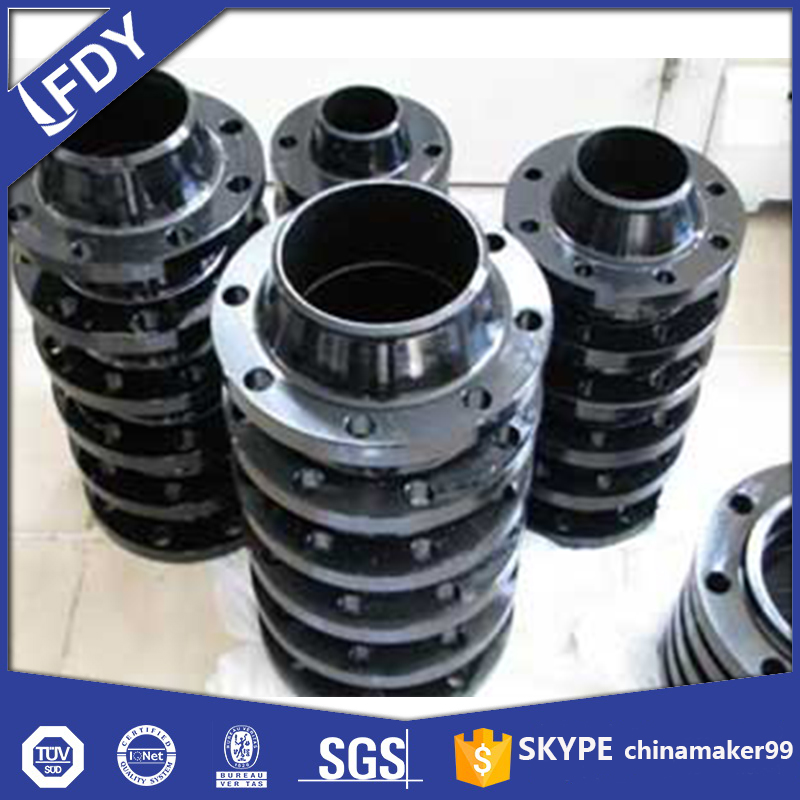
Choosing carbon steel as its primary material is a wise decision made after balancing performance, cost, and reliability. Carbon steel, primarily referring to non-alloy steel with a moderate carbon content, has become an ideal material for bearing pressure and structural weight due to its excellent mechanical strength, good toughness, and relatively economical price. The medium flowing in industrial pipelines often carries temperature, pressure, and corrosivity, which poses stringent requirements on connecting components. Carbon steel flanges are formed through precise forging or casting processes, and then undergo necessary heat treatment to obtain stable performance sufficient to withstand high-pressure and high-temperature environments. Their surfaces are usually treated with rust-proofing, or more corrosion-resistant alloy steel variants are developed on this basis to adapt to harsh working conditions such as chemical and marine environments. The widespread application of this material ensures that flanges can resist stress fatigue and environmental erosion during their long service life, maintaining the integrity and sealing of the connection.
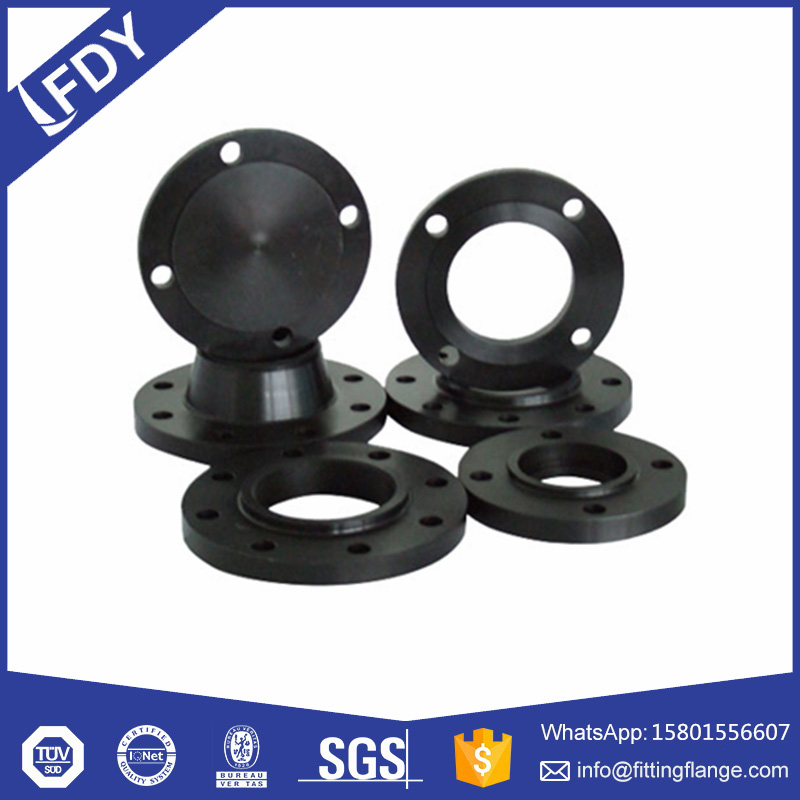
Based on the diverse needs of industrial scenarios, Carbon Steel Flanges have evolved into various types to accommodate a wide range of installation and usage conditions. The plate-type flat welding flange boasts a reasonable structure and convenient installation. It is connected to pipelines through flat welding, featuring a flat sealing surface, making it suitable for medium and low-pressure pipeline systems. On the other hand, the butt welding flange adopts a butt welding process, offering higher connection strength and more reliable sealing performance. It is widely used in petrochemical and power transmission pipelines under high-pressure and high-temperature conditions. Some Carbon Steel Flanges undergo surface treatments such as galvanizing, forming a protective layer on the carbon steel substrate surface. This significantly enhances corrosion resistance and prolongs their service life in humid or mildly corrosive environments, making them particularly suitable for outdoor pipeline systems such as water supply and drainage, and municipal heating.
Therefore, a carbon steel flange is far more than just a steel ring with holes. It is a physical manifestation of industrial logic, a symbol of standardization and reliability, and an artistic crystallization of strength and sealing. It exists silently behind the dazzling technology and in the invisible infrastructure of daily life, ensuring the flow of energy, the continuation of production, and the stable beating of the city’s pulse with its consistent solidity and silence. Understanding it is to comprehend the low-key yet indispensable tenacity upon which modern industrial civilization relies for its stable operation.